Photo Credit: Aakash Dhage
Osteoporosis is often called a “silent” condition, and for good reason. Most people don’t feel it developing. There is no obvious pain in the early stages, no warning sign in daily life, and many individuals only learn they have it after a routine bone density scan or, more concerningly, after a fracture.
Osteoporosis is a systemic metabolic bone disease characterized by low bone mass and reduced bone quality. In practical terms, this means that bones become more fragile and more susceptible to breaking, even with minimal trauma.
The main concern with osteoporosis is not discomfort, but fracture risk. These are known as fragility fractures—fractures that occur from low-force events such as a simple fall from standing height or even everyday movements like bending, lifting, or twisting.
Osteoporosis is also extremely common. It affects approximately 10 million adults over the age of 50 in the United States, and many more individuals have osteopenia, or low bone density, which places them at increased risk over time.
Because osteoporosis progresses quietly, prevention, awareness, and movement play a critical role in reducing complications.
How Osteoporosis Is Diagnosed?
Osteoporosis is diagnosed using a DEXA scan, typically performed at the hip or spine. This test measures bone mineral density and helps classify bone health along a spectrum.
Bone density is reported using T-scores:
A score of -1 or higher is considered normal bone density
A score between -1 and -2.5 indicates osteopenia (low bone density)
A score of -2.5 or lower is consistent with osteoporosis
This classification helps identify both those who already have osteoporosis and those at risk of developing it.
Why Fractures Matter
As stated, the most significant medical concern with osteoporosis is fracture risk, particularly fragility fractures. These occur with minimal force and most commonly affect the hip, spine, and wrist (distal radius).
While all fractures are important, hip and spine fractures tend to have the most significant impact on long-term independence and mobility.
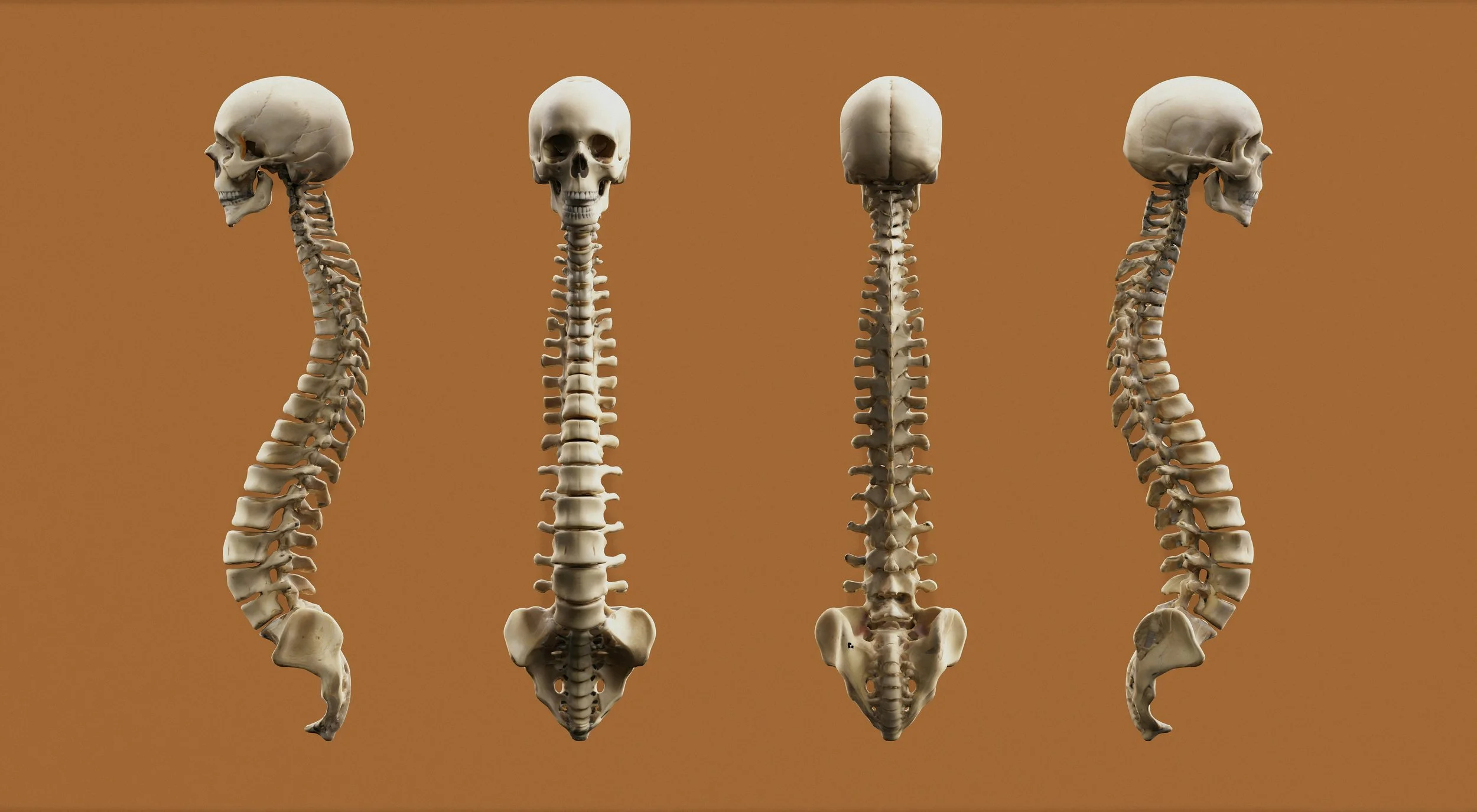
Spinal (vertebral) fractures are especially important because they may go unnoticed. Some individuals experience no symptoms at all, while others develop back pain or gradual height loss. Over time, compression fractures can lead to changes in spinal shape, including increased forward curvature (kyphosis).
These postural changes are not just cosmetic. They can balance, reduce stability, and increase the risk of future falls and fractures.
Understanding Risk Factors
Osteoporosis develops from a combination of non-modifiable and modifiable risk factors.
Non-modifiable risk factors include:
Female sex
Age over 50
Race and genetic predisposition
Family history
Post-menopausal status and reduced estrogen levels
Certain endocrine or malabsorption disorders
Long-term corticosteroid use
While these factors cannot be changed, they help identify individuals who may be at higher baseline risk.
Modifiable risk factors are equally important because they can be addressed to help reduce bone loss over time:
Low body weight (low BMI)
Low calcium intake
Vitamin D deficiency
Smoking
Excess alcohol use
Sedentary lifestyle
These modifiable factors are often where lifestyle changes and physical therapy interventions can make a meaningful difference.
Medical and Therapeutic Treatment
Osteoporosis treatment typically includes a combination of medication and lifestyle-based interventions.
Medications may include:
Bisphosphonates (such as Alendronate/Fosamax or Reclast)
Prolia
These medications help slow bone loss and reduce fracture risk.
However, medication alone is not enough. Physical activity and exercise are essential components of long-term bone health.
This is where physical therapy plays a key role.
The Role of Physical Therapy
Physical therapy focuses on more than just strength. In individuals with osteoporosis, the goal is to reduce fracture risk by improving the systems that protect against falls.
A physical therapy evaluation typically includes assessment of:
Strength
Balance
Flexibility
Posture
Movement patterns and body mechanics
Fall risk
Based on this assessment, a personalized plan is developed to improve safety, mobility, and function in daily life.
Education is also a major component. Many individuals with osteoporosis are understandably cautious about movement and worry that exercise may cause harm. One of the most important roles of physical therapy is helping patients understand what is safe, what should be avoided, and how to move confidently without increasing risk.
So, for Exercise: What Is Helpful and What Should Be Avoided?
Helpful Exercise (“Do’s”)
Weight-bearing activities help stimulate bone health and may include:
Walking
Climbing stairs
Dancing
Strength training is also important and can include:
Resistance bands
Light weights
Functional movements that support daily life:
Sit-to-stands
Squats
Bridges
Postural exercises:
Scapular retraction
Thoracic extension
Back extensor strengthening
Chin tucks
Balance training is essential for fall prevention:
Single-leg stance
Dynamic balance activities
Safe movement strategies are also emphasized:
Hip hinge mechanics
Log rolling for bed mobility
Exercises to Avoid (or Modify)
Certain movements may increase spinal stress and should be avoided or modified, especially in more advanced osteoporosis:
Loaded spinal flexion (bending forward under load)
End-range trunk rotation or side-bending
Heavy overhead lifting
Sit-ups, crunches, toe-touch stretches
Deadlifts performed with poor form
High-impact activities such as jumping, running, or plyometrics (in severe osteoporosis cases)
The goal is not to stop moving, but to move in ways that protect the spine while still building strength and stability.
Final Thoughts
Osteoporosis does not mean that individuals must become fragile, fearful, or inactive. While bone density changes are real, the way people move, train, and engage in daily life plays a major role in reducing risk and maintaining independence.
With the right combination of medical management, safe exercise, and physical therapy, many individuals can continue living active, confident, and meaningful lives.
The goal is not to avoid movement—it is to move intelligently, safely, and consistently in a way that supports long-term bone health and reduces the risk of fracture.